
Plant biology · 3 minute read
How Does a Venus Flytrap Work?
A Venus flytrap catches prey with a modified leaf. Touch-sensitive hairs trigger electrical signals, the leaf snaps shut, and continued stimulation helps start digestion. The plant absorbs nutrients through the trap, then reopens it.
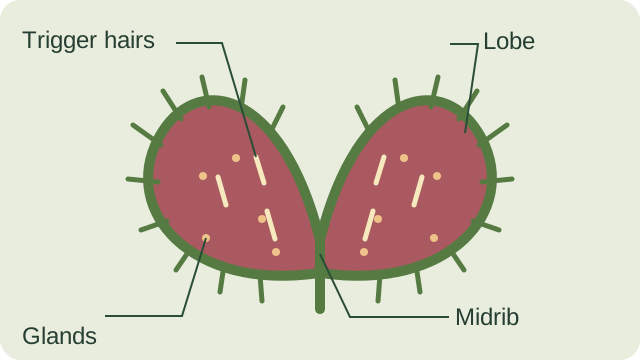
From a touch to a trap
- Sense movement. Bending a trigger hair can generate an electrical signal. Usually, two signals close together are needed to trigger a snap. This reduces responses to isolated disturbances.
- Snap shut. The two leaf halves, or lobes, rapidly change shape. Elastic mechanics help make closure fast: often a fraction of a second. There are no muscles or brain.
- Confirm the meal. A trapped animal keeps moving against the hairs. Further signals help activate the digestive response as the trap gradually seals.
- Recover nutrients. Glands release digestive fluid and absorb dissolved nutrients. Days later, the trap can reopen with tough prey remains still inside.
Sources: Kew’s flytrap explanation and Durak et al. (2022), the hunting cycle.
Does every snap mean a meal?
No. A trap can close empty and later reopen. Closing and digesting are different responses; continued stimulation helps the plant commit to digestion. A single trap may catch more than one meal, but it eventually ages and is replaced by a new leaf.
The apparent “teeth” do not chew. Breakdown happens chemically, inside the sealed leaf. Read how Venus flytraps eat and digest insects for that part of the story.
Why eat insects if it has sunlight?
Sunlight powers photosynthesis. Prey supplies extra nutrients, including nitrogen, that are scarce in the flytrap’s native soils. A meal helps meet a different need; it cannot make up for inadequate light.