
A guide to cultivated flytraps
Venus Flytrap Types: Classic, B52, Red Dragon, and Dentate Traps
All four are Venus flytraps: Dionaea muscipula. Named cultivars are cultivated selections within this one species. They can vary in size, color, and tooth shape while sharing the same trapping biology.
If your plant has no reliable cultivar label, choose Classic / Not sure. A red interior, large trap, or short teeth alone cannot prove a particular cultivar identity. Light and maturity also affect appearance.
Compare the four appearances
| Name | Defining appearance | Simulation difference |
|---|---|---|
| Classic / Not sure | A typical green flytrap with long, slender teeth around the trap’s edge. | Reference appearance only |
| B52 | Known for large mature traps on short supporting leaf stalks. | Larger illustrated traps and shorter leaf stalks only |
| Red Dragon (Akai Ryu) | Traps and leaves can become burgundy red in strong light. | Burgundy illustrated traps and leaves only |
| Dentate Traps | Short, triangular teeth around the trap’s edge. | Short triangular illustrated teeth only |
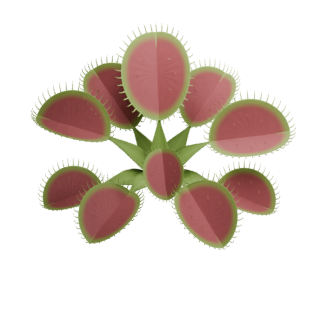
Classic Venus flytrap
Dionaea muscipula · typical, unnamed plant
This is the familiar reference plant: green supporting leaves, two-lobed traps, and long, slender teeth around the trap’s edge. Trap interiors can become redder in strong light. An unnamed plant may look different from this example without belonging to a named cultivar.
Explore Classic in the simulator →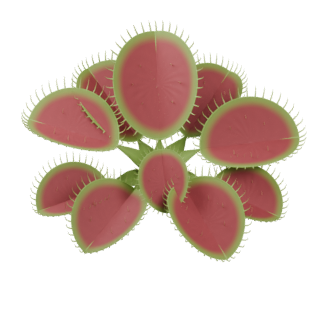
B52 · Giant traps
Dionaea muscipula ‘B52’
B52 is known for unusually large mature traps. The International Carnivorous Plant Society growing guide also notes its consistently short petioles, the leaf portions supporting the traps. Young, developing traps remain small, and favorable size reports are not a promise for every leaf.
Explore B52 in the simulator →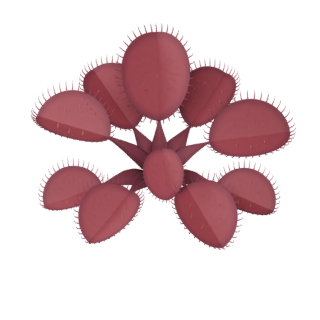
Red Dragon · Akai Ryu
Dionaea muscipula ‘Akai Ryu’
Red Dragon and Akai Ryu are two names for the same cultivated type. Under strong light, it develops burgundy-red pigmentation across much of the trap and supporting leaf. RHS describes its full-sun coloration. Healthy red pigmentation differs from a blackening trap that is aging and losing structure.
Explore Red Dragon in the simulator →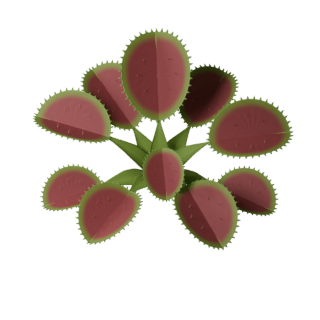
Dentate Traps · Dente
Dionaea muscipula ‘Dentate Traps’
Its short, triangular marginal teeth create a striking difference from the usual long, slender teeth. The feature becomes clearer as a trap matures. Other flytraps may also have short teeth; that appearance alone does not establish that an unlabelled plant is this cultivar.
Explore Dentate Traps in the simulator →One biological model, four appearances
The simulator changes the illustrated plant’s shape and color while keeping the same capture, digestion, reopening, and aging rules. There is no evidence here to assign these cultivated types fixed differences in digestion speed or trap lifespan. A mature trap does not enlarge after each meal; new leaves develop over time.
All four appearances use the same trapping model. Explore how a Venus flytrap captures and digests prey, or follow a single leaf from development to replacement in the trap lifecycle guide.
For growing conditions and cultivar naming, see the ICPS Dionaea guide and its cultivar registration explanation. All types still need suitable light, low-mineral water, and appropriate medium.